
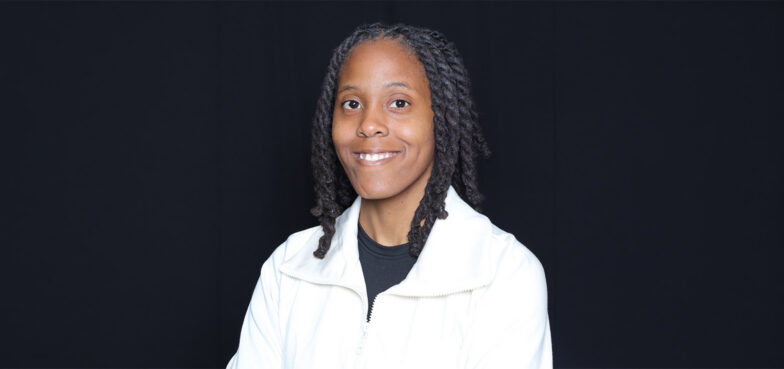
Share a little bit about yourself: Your background, family, and where you grew up and went to school?
My name is Alicia Yancey (she/her). Before 2009, I called Memphis, Tennessee home. I’m the oldest of seven children — three of whom I grew up with in Southeast San Diego — while visiting the rest whenever we could return to Tennessee. My village extends beyond my immediate family to include aunts, uncles, grandmothers, coaches, and teachers from Lincoln High School (Class of 2016, go Hornets!).
I’m a big believer in family and a lover of blues and old-school music, shaped by Soulsville and neighborhood gatherings. Those influences instilled a strong sense of justice that continues to guide my leadership, from high school to UC San Diego and beyond.
How has the Aaron Price Fellows Program impacted you?
The program delivered on its promise and more. It expanded my village through staff like Viet, Hien, Kasimu, Jane, Ken, and Theresa, as well as my fellow Fellows. It introduced me to career paths I hadn’t considered and encouraged me to lean into my curiosity while creating space for growth and self-confidence.
Did the Aaron Price Fellows Program influence the career path you chose? If so, in what ways?
While the program didn’t directly shape my current career path, it complemented my journey. I currently serve as the Organizing Director for the UC Student Association, and when I’m not at work, I volunteer my time and skills with the Afrikan Black Coalition. At any given moment, if I’m not executing training or organizing conferences for hundreds of students, I’m working with a core group of students to win campaigns related to various student issues and priorities.
What other factors and experiences in your life contributed to your interest in this field?
I have to give considerable credit to my professors, mentors, and the leadership and advocacy experience I gained during my time at UCSD. As a student, I was encouraged to think critically about the conditions that create space for individuals to experience harm, from institutional to systemic levels. I was also exposed to people and organizations that dared to challenge power dynamics, leading to meaningful change both on and off college campuses.
Working for several campus community centers deepened my appreciation and understanding of what it means to build and execute programs that are inclusive, informative, and engaging. As a community member who became Chair of the Black Student Union and eventually Head Representative for the Student Affirmative Action Committee, I found joy and purpose in coalition building and advocacy-oriented activities that contributed to the ongoing arc of student activism and organizing.
What accomplishments are you most proud of in your work? Or in life in general.
I take satisfaction from seeing my students progress in their leadership journeys and witnessing the fruits of the initiatives I plan and work on for months. For instance, I carry the torch, picked up from my former co-worker Amine El Moznine, in helping to revitalize the oldest national student organization, the United States Student Association. Additionally, hearing student testimonials about how a program has exposed them to new ideas or inspired them to pursue leadership positions on their campuses — or to become more involved in their local communities — brings me contentment.
What do you feel are the greatest challenges and rewards in your field?
Both the reward and challenge in my line of work is that each year, I train and cultivate a new group of individuals. Developing the problem-solving, leadership, and advocacy skills of a diverse cohort of students — who often lack similar resources, weren’t all afforded the same opportunities that lead some of them to more confidently operate in positions of leadership than others, and who set complex goals within a single academic year — is not for the faint of heart.
I’ve had the privilege of seeing students secure millions of dollars to support food banks and pantries and to prevent budget cuts for California’s public higher education systems. However, they often face the same institutions that rely on student turnover and may temporarily lose momentum in advocating for the expansion of student-facing services or resources due to a loss of institutional knowledge, which allows administrators to feign ignorance when confronted.
Can you share something about your life outside work, such as hobbies, traveling, etc?
When I’m not working and in my homebody phase, I can be found debating whether to pick up one of the many books on my to-read list, play video games, or watch something on TV. If I’m not at home, you can find me out with friends or family, chasing new experiences or adventures like skydiving or even dogsledding.
Finally, based on your life experiences, what advice would you offer to the youth served through Price Philanthropies programs and City Heights partners?
Take advantage of the opportunities that exist in your academic or work environment; you never know who you’ll meet or what you’ll find out about yourself. Embrace scary, big challenges even if you don’t think you’re ready.