
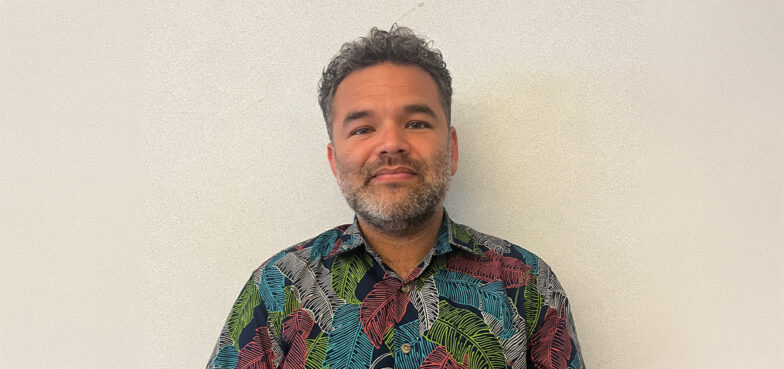
Share a little bit about yourself: Your background, family, where you grew up, and what class you were?
Hello, my name is Mauro Soria, and I am the son of parents who immigrated from Michoacán, Mexico. I attended Hamilton Elementary School, Clark Middle School, and Hoover High School, Class of 2006. After high school, I continued my education at Mesa College before transferring to the University of California, San Diego, where I earned a bachelor’s degree in history in 2011. Today, I live and work in City Heights, practicing restorative justice at Monroe Clark Middle School (a position funded by Price).
How has the Cardinals Interact Program impacted you?
Cardinals Interact allowed me to meet people from different social, religious, and economic backgrounds. The program expanded my understanding of people’s upbringings and challenged me to think of the career path I wanted to take after high school. Because of the personal growth I experienced with Cardinals Interact, I was inspired to make a similar impact on young people. It is one of the biggest factors that led me to pursue a career in education.
What other factors and experiences in your life contributed to your interest in this field?
No one really remembers the assignments they worked on in middle school, but I distinctly recall an assignment in 8th grade. It challenged us to think of what accomplishments we wanted to achieve by the time we were in our 20s, 30s, etc. When I started teaching at Clark, that same teacher handed me the same assignment I had completed fifteen years prior. I had completely forgotten what I had answered but was happy to see that I had completed all the items on my list. Mrs. Meehan was the first person to make me think about my future and how I wanted to get there. When it came time to decide what career I wanted to follow, I knew that working with youth to experience that same spark was my calling.
How long have you been working in your field?
This is my 10th year working in education.
(Editor’s note – Mauro approaches his work with humility. His experience extends beyond his role as a teacher at his alma mater, Clark Middle School. Through his interactions with students and his leadership among teachers, he was purposefully promoted to the restorative justice role. Over the years, Mauro has cultivated a deep understanding of the unique needs of each student. One notable example is his effort to secure a replacement bicycle for a student in need.)
What accomplishments are you most proud of in your work? Or in life in general.
I have a deep pride in living and working in City Heights.
What do you feel are the greatest challenges and rewards in your field?
A large portion of my work is consumed with conflicts among students. From my interactions with students, they seem to take matters into their own hands because they do not have a trusted adult in their lives. There is an alarming amount of youth who are turning to drugs and harmful relationships outside of school to obtain a sense of acceptance or belonging. While addressing these conflicts often reveals the challenges students face outside of school, it also provides a rewarding opportunity to guide them toward personal growth.
Rewards in my field come when I least expect them. In one instance, I was hosting a mediation between two girls because there were rumors of them wanting to fight. The girls hardly knew each other but found out that they had a friend in common. Both students shared that the rumors primarily came from their mutual friend. The mutual friend was brought to the mediation and admitted to spreading information that led to the rumors. The girls shared how the rumors had made them feel and the mutual friend shared that he was spreading confidential information about the girls because he had trouble making friends and was trying to make everyone happy. The mediation that had originally started to prevent girls from fighting turned into a heartfelt conversation about the meaning of friendship.
Any other challenges facing youth today?
A lot of challenges stem from social media and gang influence. Now that students have unrestricted access to their friends, peers, and those they don’t get along with, students tell me of “being on call,” receiving notifications at 1:00 AM of what people are saying about them. They seem to have no rest from never-ending drama. Students report they cannot bring themselves to unfollow or unsubscribe. They’re exhausted from the mental and emotional anguish that social media creates in their daily lives. They carry this exhaustion with them when they come to school, and it unravels when they see in-person the people they had been chatting with the previous night. The verbal and physical conflicts that grow from the previous night’s session on Instagram follow them, and the cycle repeats.
Meanwhile, gang-related challenges range from students seeking gang recognition, facing intimidation, or struggling to leave gang life. This creates a situation where students do not feel safe at home, at school, or anywhere in between. The never-ending need to be hypervigilant is exhausting for a 13-year-old. It stings to see students claim their allegiance and personality to violence. Students who are prey to gangs need the mentorship of someone whom they can look up to.
Can you share something about your life outside work, such as hobbies, traveling, etc.?
During the pandemic, my partner encouraged me to take up cycling. I (try to) go on bike rides a couple of days a week for my mental and physical health. I spend the majority of my time outside of work with my partner, two dogs, and eight chickens.
Finally, based on your life experiences, what advice would you offer to the youth served through Price Philanthropies programs and City Heights partners?
I would encourage them to learn and take pride in the community they live in.